Rediscover the Deliciousness of Green Tea! How to Brew It Enjoyably Through the Second Infusion
Even the green tea you enjoy every day can taste remarkably different depending on how it is brewed. Simply adjusting the water temperature and steeping time can significantly enhance its umami, making both the first and second infusions exceptionally delicious. Why not take a moment after a meal or on a relaxing afternoon to savor carefully brewed green tea from a teapot?
Here, we introduce a method for brewing green tea that brings out its rich umami, shared by the long-established tea producer Harada Seicha, with over 100 years of history.
How Aroma and Flavor Change with Steaming Time
The enjoyment of green tea begins with choosing the tea leaves. One key step in green tea production is "steaming," which stops the fermentation of the leaves. The length of steaming affects the tea’s flavor, aroma, and color.
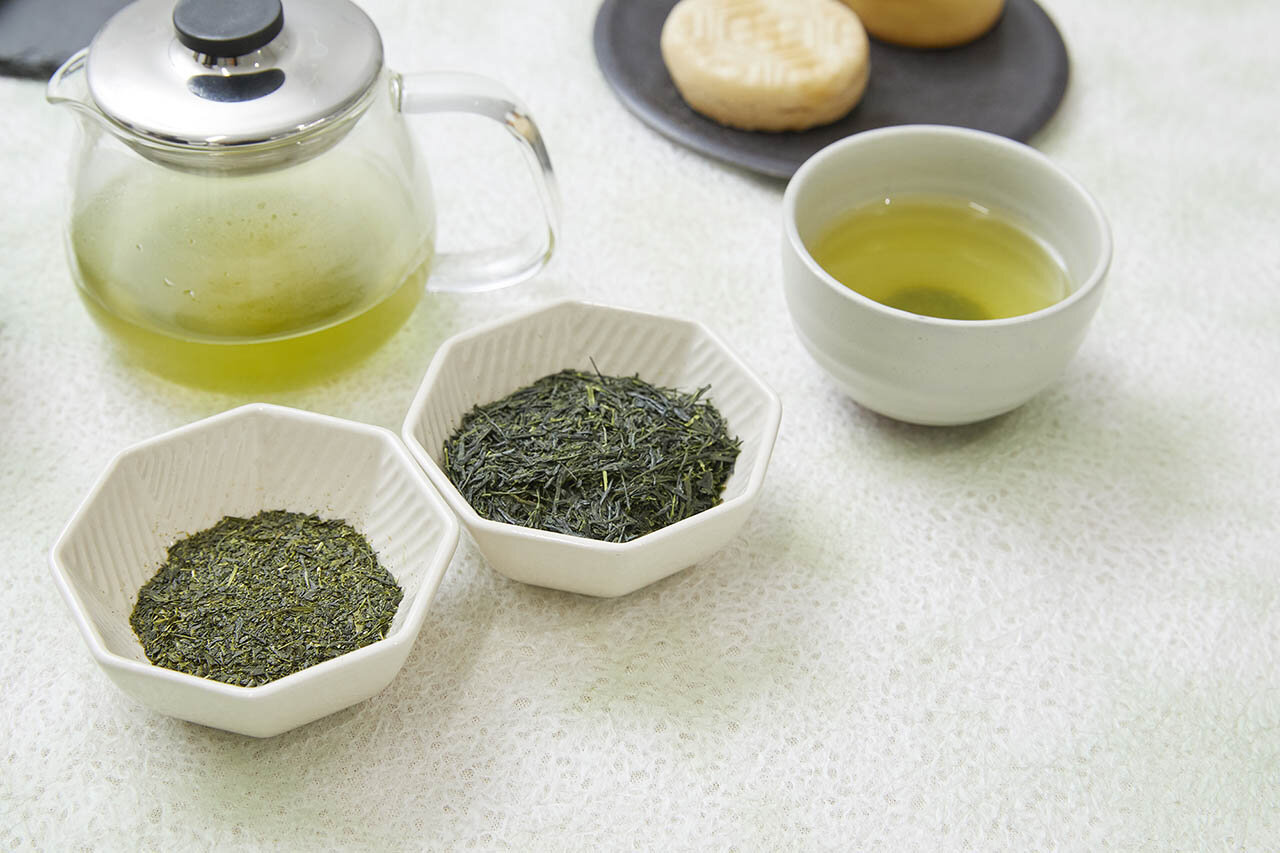
(Left) Deep-Steamed Tea Leaves (Right) Lightly-Steamed Tea Leaves
Deep-Steamed Tea
Characterized by a longer steaming time, the leaves are finely broken with more powder. The tea has a deep green, slightly cloudy color and a subtle astringency.
Lightly-Steamed Tea
With a shorter steaming time, the leaves remain larger in shape. The tea has a light, clear color but offers a pronounced aroma and rich umami.
How to Brew Green Tea to Bring Out Its Umami

Harada Seicha
Brewing green tea with boiling water tends to release more bitter compounds. Using water that has been slightly cooled helps suppress the bitterness and brings out the tea’s umami.
1. Cool the Water
Pour boiling water into the teapot and then transfer it to a tea cup. This simple step lowers the temperature from around 100°C to about 85°C.
2. Add Tea Leaves and Cooled Water to the Teapot
For three small tea cups of water (180–220 mL), use about two teaspoons of tea leaves. Return the cooled water from step 1 to the teapot, cover it with the lid, and let it steep. Steeping time: 40–50 seconds for finely broken deep-steamed tea, and about 1.5 minutes for larger lightly-steamed leaves.
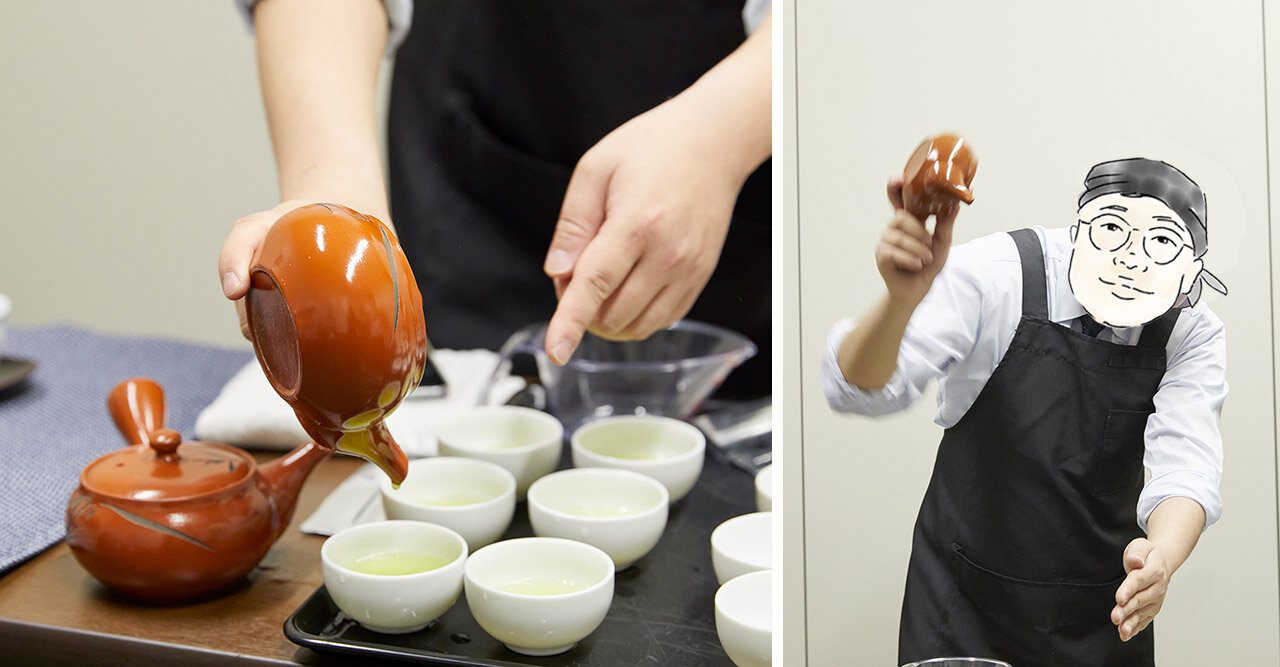
3. Pour Using the "Rotating Pour" Method
Pour the tea evenly into each cup in small amounts. Repeat the sequence, for example, A → B → C, then C → B → A, to ensure uniform flavor and strength in each cup.

Harada Seicha
Be sure to pour every last drop of green tea. The final drops contain a strong umami component (amino acids) known as the "Golden Drop."
Review with a Video: How to Brew Delicious Green Tea
Source: YouTube
Savoring Flavor, Aroma, and Color — Green Tea-Loving Employees Compare Varieties
Green tea brewed with just a little extra care becomes even more flavorful.
Sato, an employee of Seven-Eleven Japan, who says, "Taking time to slowly enjoy green tea after dinner is a blissful moment," compared two types of green tea: Seven Premium Deep-Steamed First Harvest Tea 100g – ¥699 (tax included) and Seven Premium Gold Ultimate Sencha 100g – ¥1,077 (tax included).

Recently, Sato has been experimenting with different temperatures for gyokuro*, aiming to perfect the most delicious way to brew it.
*Gyokuro is a high-grade Japanese green tea known for its sweetness and rich umami flavor.
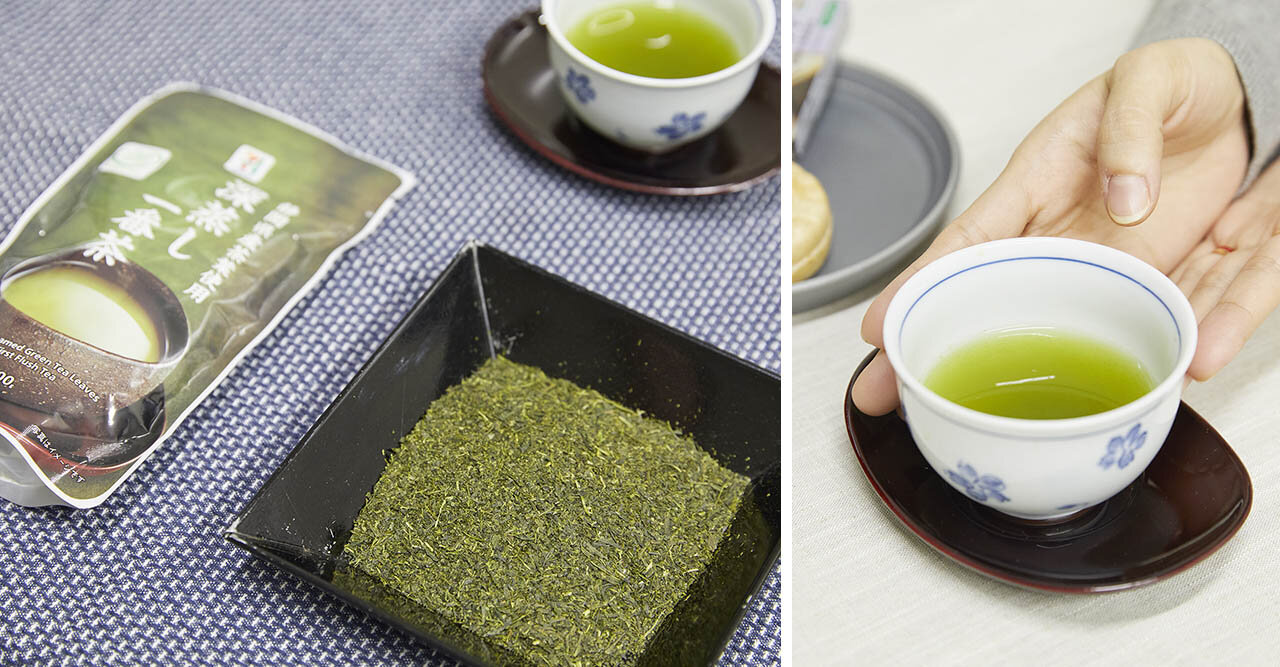
Deep-Green Tea with Fine Particles: "Deep-Steamed First Harvest Tea"
Seven Premium Deep-Steamed First Harvest Tea is a deep-steamed tea made from tea leaves grown in Shizuoka Prefecture. It offers a mellow umami flavor and a rich, full-bodied taste.

Sato
With Deep-Steamed First Harvest Tea, you can still enjoy the characteristic bitterness of green tea, but the astringency is well controlled. It has a mild, well-balanced flavor. It’s similar to the tea I usually drink, but I especially like its toasty aroma.

Harada Seicha
Because these are deep-steamed leaves, the fine particles are extracted directly, contributing to a sharp, clean astringency. Since the tea is lightly roasted during finishing, you can also enjoy a toasty aroma (hi-ka) from the roasting. It releases flavor quickly, making it easy to brew even in a short steeping time.
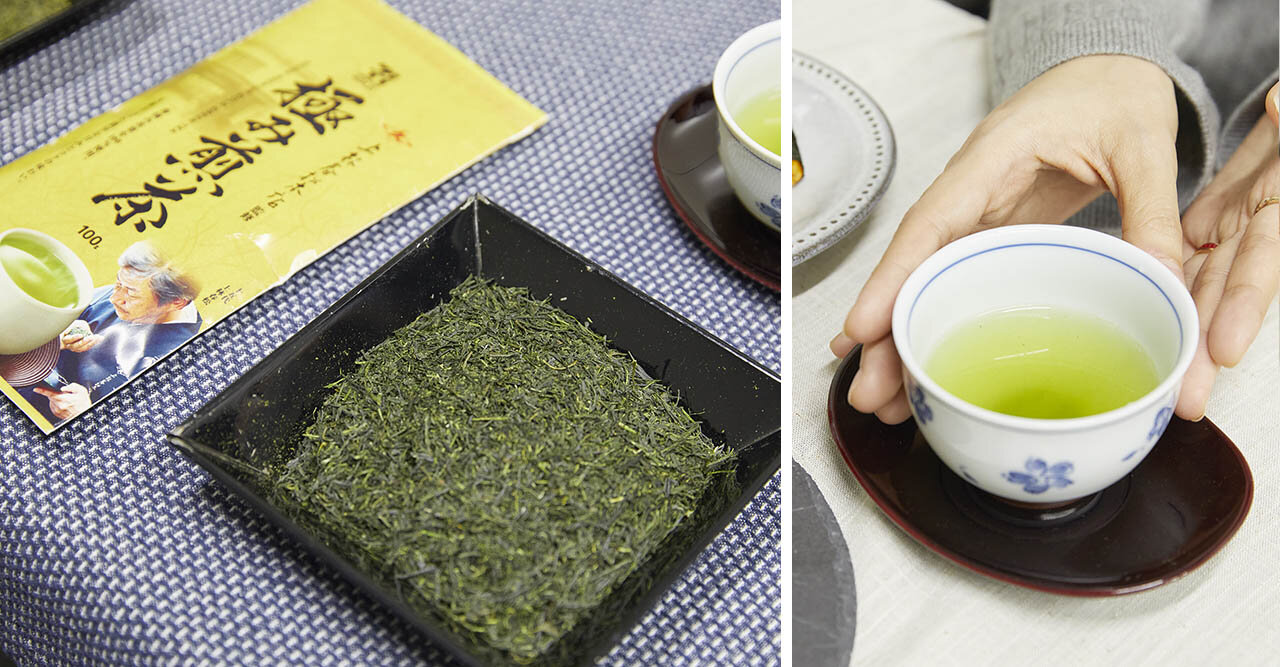
"Ultimate Sencha" with a "Golden-Clear" Color
"Seven Premium Gold Ultimate Sencha" is a sencha primarily made with lightly-steamed leaves, supervised by the long-established Kyoto tea shop Kanbayashi Shunsho Honten. It is a well-balanced blend of seven types of domestically grown tea leaves, each offering distinct characteristics such as sweetness, richness, mellowness, and aroma, including gyokuro.

Sato
The lightly-steamed Ultimate Sencha has a fruity and floral aroma. Its light, clear color gives it a smooth, refreshing mouthfeel, yet it delivers a full-bodied umami. The lingering aftertaste is also deeply satisfying.

Harada Seicha
The Ultimate Sencha is a masterfully crafted blend designed to be enjoyed through the second infusion. The first brew releases a sweet aroma and rich umami, with some even likening it to the refined taste of high-quality dashi*. The umami lingers after each sip, giving it a distinctive and special character. It’s also perfect for serving to guests.
*Dashi is a traditional Japanese stock made from ingredients such as kombu (kelp) and bonito flakes, known for its deep umami flavor.
How to Brew the Second Infusion of Ultimate Sencha
Before brewing the second infusion, gently tap the side of the teapot used for the first infusion. This moves the tea leaves that have gathered near the spout back toward the center, making it easier to brew the second infusion without clogging.
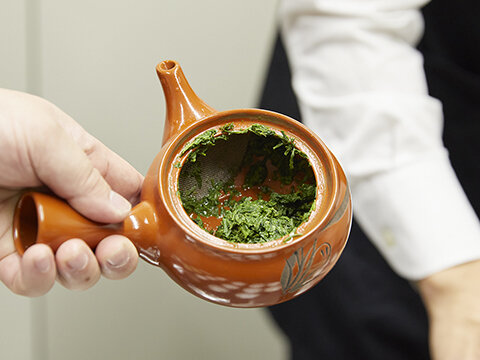
Tea leaves of Ultimate Sencha returned to the center of the teapot after gently tapping it following the first infusion.

Harada Seicha
For the second infusion, you can pour boiling water directly into the teapot without cooling it first. Let it steep for about 10 seconds. During this time, the leaves that didn’t fully open in the first infusion unfold, releasing flavor, color, and aroma.
In the first infusion of Seven Premium Gold Ultimate Sencha, a blend of seven types of lightly-steamed tea leaves, some leaves have fully opened while others remain closed. This is precisely what makes it a carefully crafted blend that tastes delicious even in the second infusion.
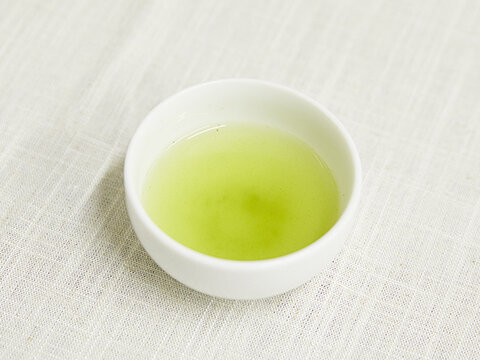
Ultimate Sencha – Second Infusion

Sato
I noticed that the aftertaste is particularly different from the first infusion. The umami is slightly lighter, giving it a clean and refreshing taste. You can sense a hint of astringency, followed by a subtle return of umami. It’s a special tea that you can enjoy twice from a single teapot. On my days off, I’d love to take my time and brew it with care.
Deepening Flavors: Pairing Green Tea with Sweets
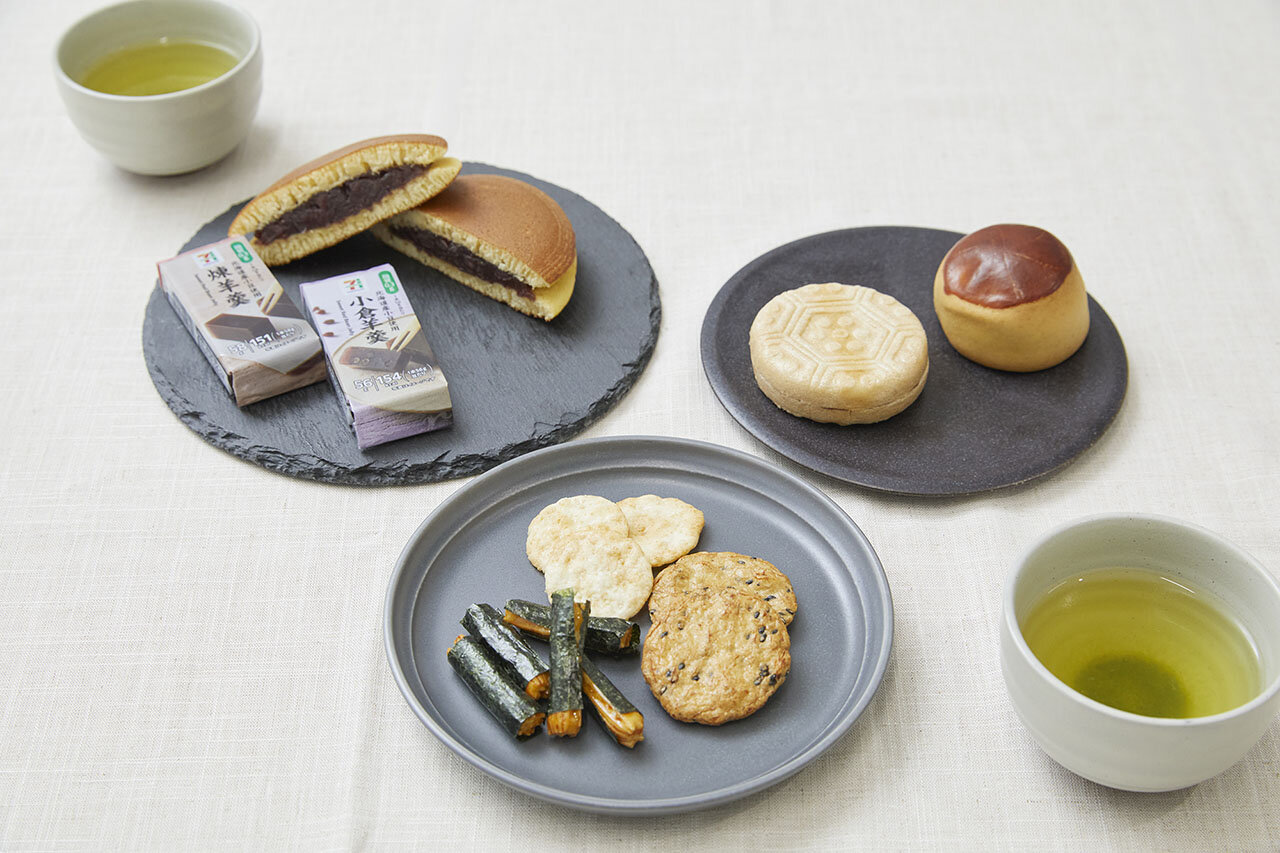
Top Left: Seven Premium Dorayaki, Seven Premium Ogura Yokan, Seven Premium Neri Yokan
Top Right: Seven Premium Azuki Monaka, Seven Premium Large Chestnut Manju
Bottom (clockwise): Seven Premium Thin Salted Senbei, Seven Premium Black Sesame Senbei, Seven Premium Shinagawa Roll
Green tea is delicious on its own, but pairing it with complementary sweets can further deepen and enrich its flavor.

Harada Seicha
Lightly-steamed tea, known for its fragrant aroma and rich umami, pairs well with delicately sweet treats like dorayaki or chestnut manju, as well as light, toasty senbei. Deep-steamed tea, with its characteristic astringency and depth, complements heartier sweets such as yokan and monaka.
The time spent waiting for the tea leaves to open, surrounded by their rich aroma, creates a pleasant pause in a busy day. By slightly adjusting the water temperature and steeping time to suit the leaves, you can fully appreciate the depth of green tea. Start with today’s cup and give it a try.
This text has been translated using an automatic translation tool.