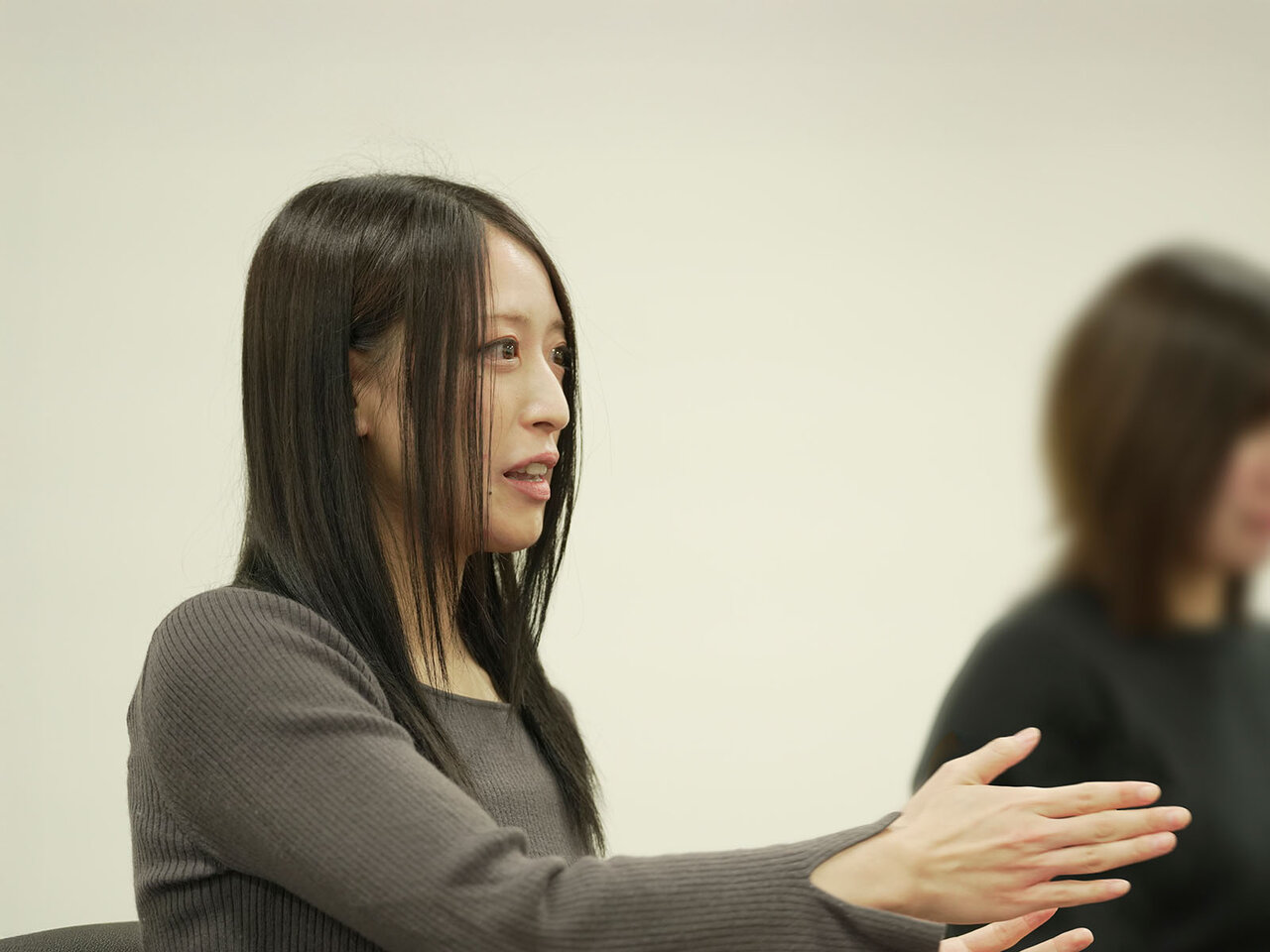
Supporting and Being Supported: How Tambo from Seven-Eleven Japan’s Hokuriku Area Shapes Her Way of Working
Every career has a "starting point." For some, it is the time spent with friends during student days, a part-time job, or perhaps a single word of encouragement received from someone influential.
In this series "Work Styles in Several Colors," we explore the diverse career journeys of Seven & i Group employees, tracing their paths from their origins to the present day.
This time we feature Tambo, an Assistant Manager at a district office in Seven-Eleven Japan’s Hokuriku Area. She is responsible for the accounting operations that support the management of franchised stores.
Her story begins with two sports: soccer and water polo.
Lessons from the Two Sports
As a young girl, Tambo was involved in many extracurricular activities, including swimming, abacus, and piano. Despite being surrounded by peers, she preferred to work quietly and diligently on her own, rarely taking the initiative to communicate with others.
"I’m the youngest of three siblings and was incredibly shy," she recalls. "I couldn't do anything unless I was clinging to someone. I just followed whatever my older brother and sister were doing. While I enjoyed the lessons, I never really spoke up about what I wanted to do."
That quiet demeanor changed in the fourth grade when, for the first time, she raised her hand and said she wanted to try soccer.
"There was a girls' team at the soccer club my brother attended. As I watched them play, I felt a natural desire that I wanted to play soccer, too."

Through soccer, Tambo experienced the thrill of a team chasing a single goal: victory. It was an experience that began to transform her.
Following soccer, she chose water polo as her sport in junior high school.
"Water polo is often called 'martial arts in the water' because it’s so grueling," she laughs. "I was constantly covered in scars. Looking back, most challenges I face today seem manageable compared to those three years. It built both my physical and mental strength."
The team practiced from the time the cherry blossoms fell until the onset of winter. Despite shivering in the cold, Tambo stayed committed for three years because she and her five teammates had made a pact: to win the national championship.

"We spent every moment together—during practice, during breaks, and even on our days off. We were incredibly close. That shared determination to win at all costs really united us."
Chasing a collective goal, communicating with teammates, and fostering deep bonds—the lessons she learned from these two sports would become the foundation of her future career.
Days of Being Supported, In Order to Support Others
After graduating from junior college, Tambo took a job at a mobile carrier store. While many assume retail is purely about sales and contracts, she found the reality to be quite different.
"I thought I’d be pressured to hit new contract quotas," she reflects. "But in reality, many customers came in because something was wrong—whether their phone wasn't working, or it was broken. Many customers came in with a negative state of mind."
Tambo made her mission to ensure every customer left feeling glad they had visited the store.
"By speaking with the customer, organizing the situation, and identifying the root cause, I could see their frustration turn into a smile. Sometimes, that trust even led to new contracts. I loved the feeling of turning a 'negative' entrance into a 'positive' exit."

Engaging with customers and leading them to the goal for a smile sparked a new desire in her: "I want to support people from the back office."
"That’s when I happened to see a job opening for my current district office. 7-Eleven didn’t enter the prefecture until 2009, so during my student days, 7-Eleven was a store I admired from afar."
After three years of work experience at the mobile store, she joined Seven-Eleven Japan and was assigned to the Hokuriku Area’s District Office Accounting Department. Her primary role was supporting the accounting of franchise owners. While it was the back-office role she had wanted, the complexity and responsibility initially overwhelmed her.
"As a newcomer, I made mistakes repeatedly and felt so frustrated with myself. Also, our department is the closest to the owners after the OFCs*, so we talk on the phone frequently. I often struggled to explain things clearly and would regret afterward thinking, 'I should have said it this way.'"
* OFC (Operation Field Counselor): Professionals who provide management counseling to Seven-Eleven franchise owners.
It was then that Tambo realized she couldn't do this job alone.
"To truly support an owner’s business, you have to collaborate—not just with your accounting colleagues, but also with the OFCs who work directly with the owners. I realized that this is what it means to work as a team."

Tambo consulting with her supervisor, Asano.
With the support of those around her, Tambo gained confidence. Her communication with owners gradually became something she genuinely enjoyed.
"Each owner has their own vision. Once, an owner told me over the phone about their dream of expanding their business. When they opened their second store, I was so happy for them. That feeling became the driving force behind my work."
Through these experiences, Tambo increasingly felt ready to take the "next step."
A Push Toward the Next Step
"I realized I had been an accountant for the past 10 years and wondered, 'Is this enough?' I felt that by gaining more diverse experiences, I could grow as a person and, more importantly, contribute more to the company."
While there was a path for management in accounting as an option, she initially felt she wasn't suited for it. While she was pondering her next move, a specific opportunity caught her eye: a call for "support staff" to be stationed at another district office.
"I applied without hesitation. When the prefecture was struggling after the Noto Peninsula Earthquake, we received so much help from district offices across the country. Since then, I had wanted to see how people in other regions were working."

A meeting with members of the district office.
After spending ten years at her district office, she left for a three-month assignment in the Shinetsu Area. Though brief, the experience was transformative.
"The core accounting tasks were the same, but the workflow was entirely different. I saw things there that could be applied to my own district office, and things from my own experience that could be useful in the office I was assigned to. It was a period of constant discovery."
Tambo shared these insights with her colleagues. An Assistant Manager also agreed with her, and together they worked to revise the workflow.
"Not everything could be changed, but several of my suggestions were implemented. Building relationships from scratch in a new place and creating something tangible... I never thought I was capable of that. I felt like I had grown as a person."
This newfound confidence changed her perspective on leadership.
"The Manager and Assistant Manager in the Shinetsu Area told me quite seriously, 'You can do this.' Until then, I thought I wasn't cut out for management because I viewed myself solely as a 'supporter.' But hearing it from people who had observed me objectively for three months made me think that maybe I could take that new path."
Shortly after returning to her district office in the Hokuriku Area, Tambo was appointed Assistant Manager—even before she had officially voiced her new ambitions. It seemed that the Manager, too, had seen the same potential in her all along.
Her Way of Working Is White
Despite the promotion, there was a bit of uncertainty in Tambo's mind.
"There were so many people more capable than me, and I wasn’t sure how to interact with them or how to give instructions. That’s when my manager suggested I look into servant leadership. I learned that there’s a form of management that moves forward by understanding and supporting others. From then on, I started to see management as work that builds the future together."
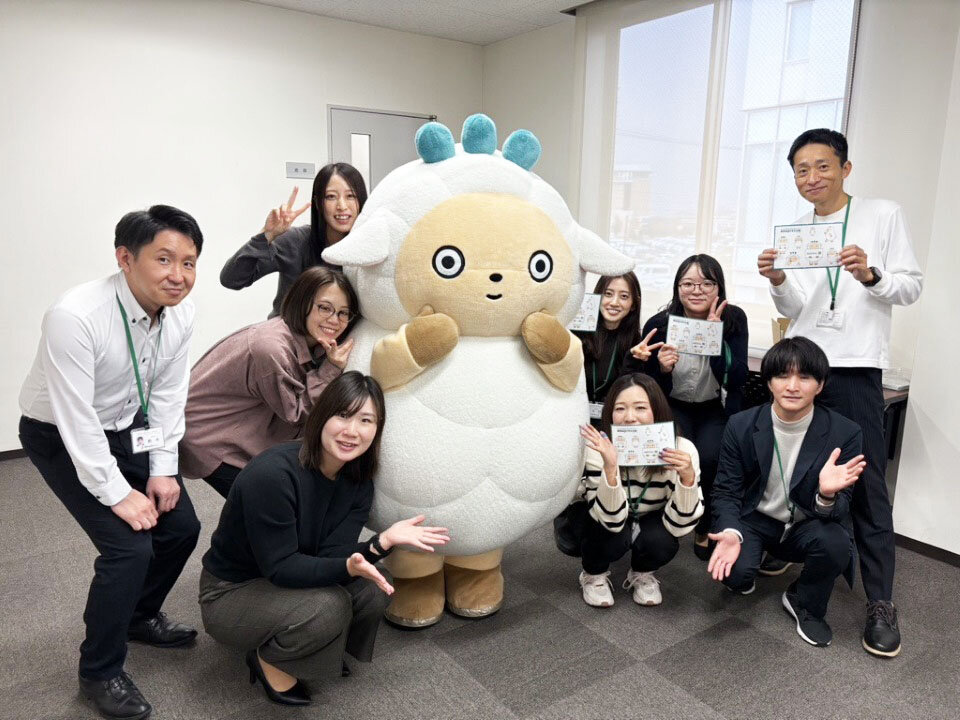
With colleagues from the Hokuriku Area office around Mezamē.
Tambo was asked to express her way of working through a color.
"I like adapting to the people around me. That’s why I chose white—it complements any color and blends with all of them. Sometimes I step forward; other times I support from behind. By layering different colors together with everyone, I hope we can create new landscapes."

Supporting one another, together
From a shy girl who once followed others’ backs, to an adult who now supports them.
Tambo’s story, colored in white, is still unfolding.
This text has been translated using an automatic translation tool.