Tekken's "My Awakening": Redrawing the Map of Success After Every Failure
Everyone experiences a moment of awakening. In this series, Asupresso explores the potential within those turning points. Each installment features a special guest reflecting on the experiences that shaped their path. This time, we introduce comedian and flip book animation artist Tekken.
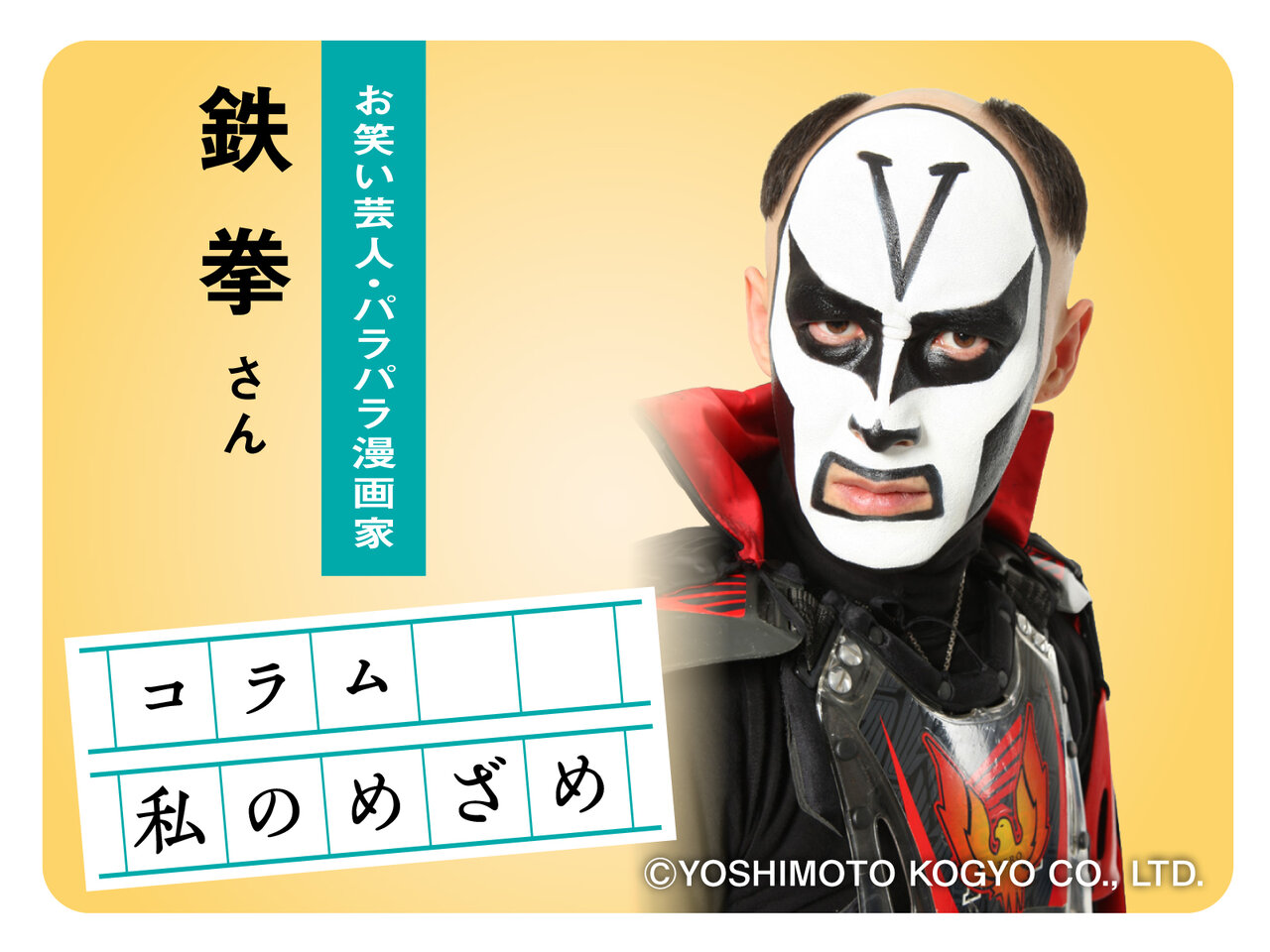
Tekken (Comedian / Flip book Animator)
Born in 1972 in Nagano Prefecture, Japan. At 26, he debuted with a unique comedy act, performing in professional wrestling gear while presenting hand drawn sketches. In 2012, he gained widespread recognition with his flip book animation Furiko (Pendulum), which portrays the love between a married couple. His major works include Kizuna (Bond) and Kazoku no Hanashi (Family Story), the latter adapted into a film. He has also collaborated with numerous musicians to create music videos.
Mixing Setbacks Created Tekken
Becoming a manga artist was a childhood dream sparked by years of reading Shonen Jump and drawing my own stories. During my first year of high school, a debut submission to the Chiba Tetsuya Award in Young Magazine surprisingly earned an Encouragement Prize, fueling a belief that I truly had what it took. That confidence was short-lived, however, as the next submission failed to even reach the final round. That was my first harsh reality check.
Two years later, a move to Tokyo to pursue professional wrestling seemed promising after passing the entrance test. The excitement quickly turned to disappointment upon learning the offer was for a referee position rather than a wrestler’s role. Realizing the dream wouldn't unfold as imagined, I fled the training camp that very night.
A period of construction work in Nagano followed, accompanied by a deep sense of aimlessness after two major setbacks. It wasn't until age 22 that a return to Tokyo and a theater group audition offered a new path. The inspiration came from a local diner owner who, seeing my indecision over a menu, remarked: 'Try a different dish each day. Eventually, you will find what you like. Finding a job works the same way.' While this push briefly reignited a sense of potential, my poor pronunciation and weak delivery on stage led to laughter for all the wrong reasons. Being told I wasn’t suited for the craft marked the end of yet another dream.
At the time, the TV comedy show Vocabula Tengoku was a cultural phenomenon, and comedians were in high demand. The program was known for turning young talent into national celebrities. Inspired by the excitement surrounding the show and fueled by a spark of envy, I began auditioning despite having zero preparation. After two years of struggling to find a partner, a suggestion from a peer set my new path in motion: 'Go it alone. Perform on your own.'
That epiphany sparked a unique synthesis: a way to combine a love for manga and wrestling with an unconventional delivery to create a truly original comedy act. This led to the birth of 'Tekken,' a character defined by a reverse mohawk and face paint inspired by the legendary American wrestling tag team, the Road Warriors.
While early performances were met with criticism, the mockery gradually transformed into genuine laughter. This momentum eventually culminated in a victory at a live comedy competition. For the first time in a life marked by setbacks, a true sense of belonging began to take root.
What I Found After Losing Everything
My sketchbook routine built around the phrase “You know it is bad when...” became popular, and work increased quickly. I experienced the thrill of success.
However, the momentum did not last. I was labeled a one hit wonder. As new performers appeared, my opportunities decreased. Even though I felt I was still moving forward, the world seemed to move faster than I could keep up.
Around that time, I had dinner with Hakata Daikichi, one half of the award winning comedy duo Hakata Hanamaru and Daikichi, who are widely known in Japan for their manzai style performances. When I mentioned that I was looking for representation, he suggested that I join Yoshimoto Kogyo, one of Japan’s largest and most influential talent agencies. I worked hard for two years, yet without a major hit, opportunities did not increase. I began to question whether I could survive in the industry long term.
Shortly after I told my manager I planned to leave Yoshimoto, the Great East Japan Earthquake occurred. During that uncertain period, I received an offer to create a flip book animation within one month, and I accepted.
My first piece used the song Ora Tokyo Sa Iguda (I’m Going to Tokyo) by Ikuzo Yoshi, a famous folk style singer known for humorous songs about rural life. The animation was screened at the Okinawa International Movie Festival, where fellow comedians praised it. It was humorous and included my own jokes. When it was screened at the Okinawa International Movie Festival, fellow comedians praised it.
Shortly after, I triumphed in a televised flip book competition. While it wasn't an overnight explosion of fame, it led to a steady stream of requests. In the wake of the 2011 earthquake, I was commissioned to create an uplifting piece; the resulting work, Tsunagaru (Connections), resonated deeply with audiences.
However, the real turning point came when an unauthorized upload of my animation Furiko appeared on YouTube. Although I had originally created the video for a separate competition that I also won, the unauthorized upload went viral and reached three million views in just one week. As it gained global traction, it caught the attention of the British rock band MUSE. Because I had used their music in the background, I was stunned when they reached out to request the animation as their official music video.
The Map of Life Expands When You Lose Your Way
Everything I draw comes from what I have experienced. Furiko is based on my own family. Working at construction sites, being scolded, neglecting my family, and facing repeated setbacks. I turned those painful memories into animation.
Even now, I sometimes wonder how I overcame three major failures. At the time, I often listened to the song RAMBLING MAN by COMPLEX, a rock unit formed by Tomoyasu Hotei and Koji Kikkawa. Lyrics like “Nothing begins unless you start running” pushed me forward. Since no one knew who I was, I had nothing to lose. I simply kept trying.
There is a phrase I love. You will remember the road where you once lost your way. The more detours you take, the more mistakes you make, the more your map of life expands. My life has been full of setbacks, but because of them, I awakened to where I truly belong. The experiences that did not go well became my greatest assets.
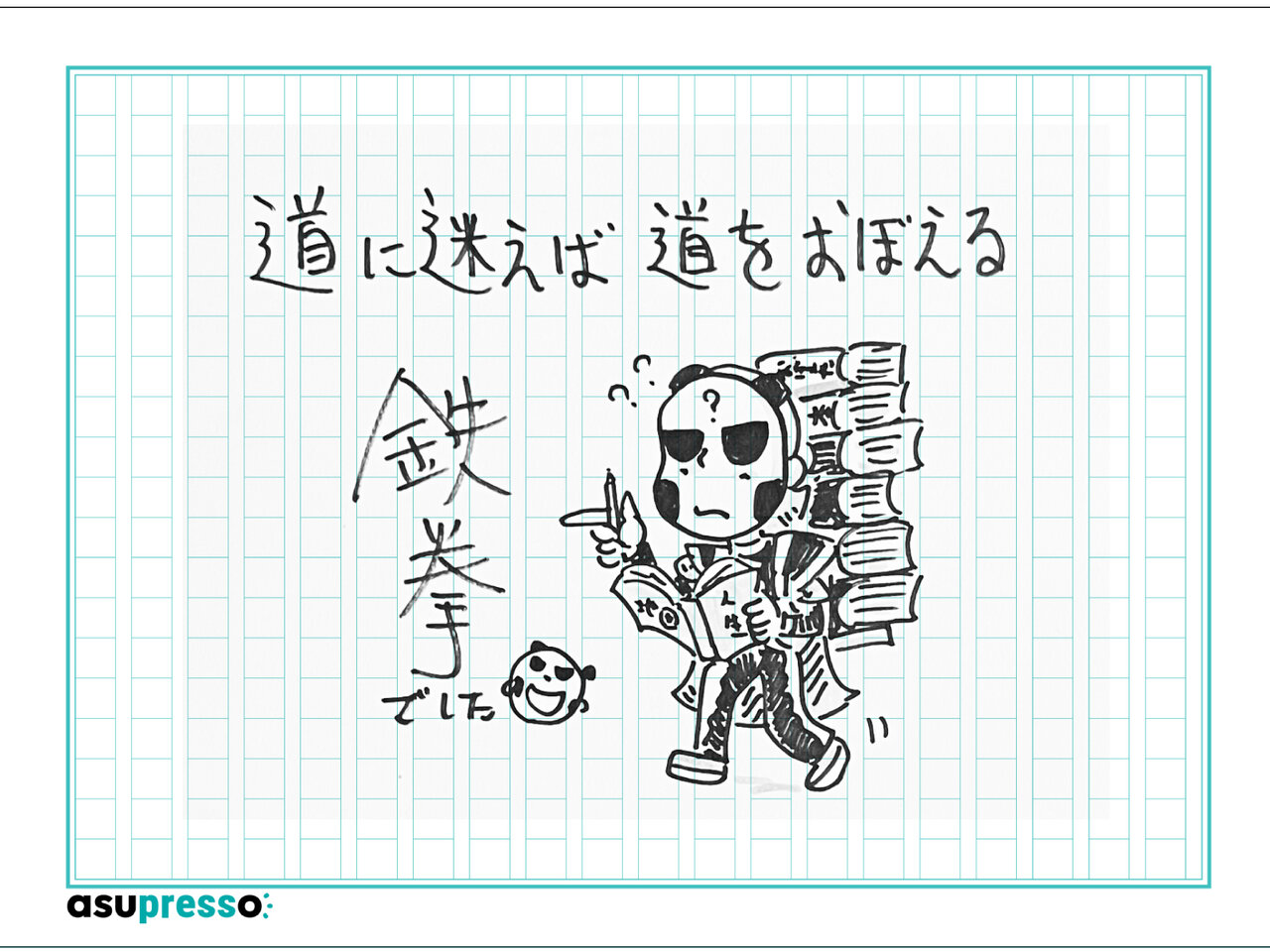
You will remember the road where you once lost your way.