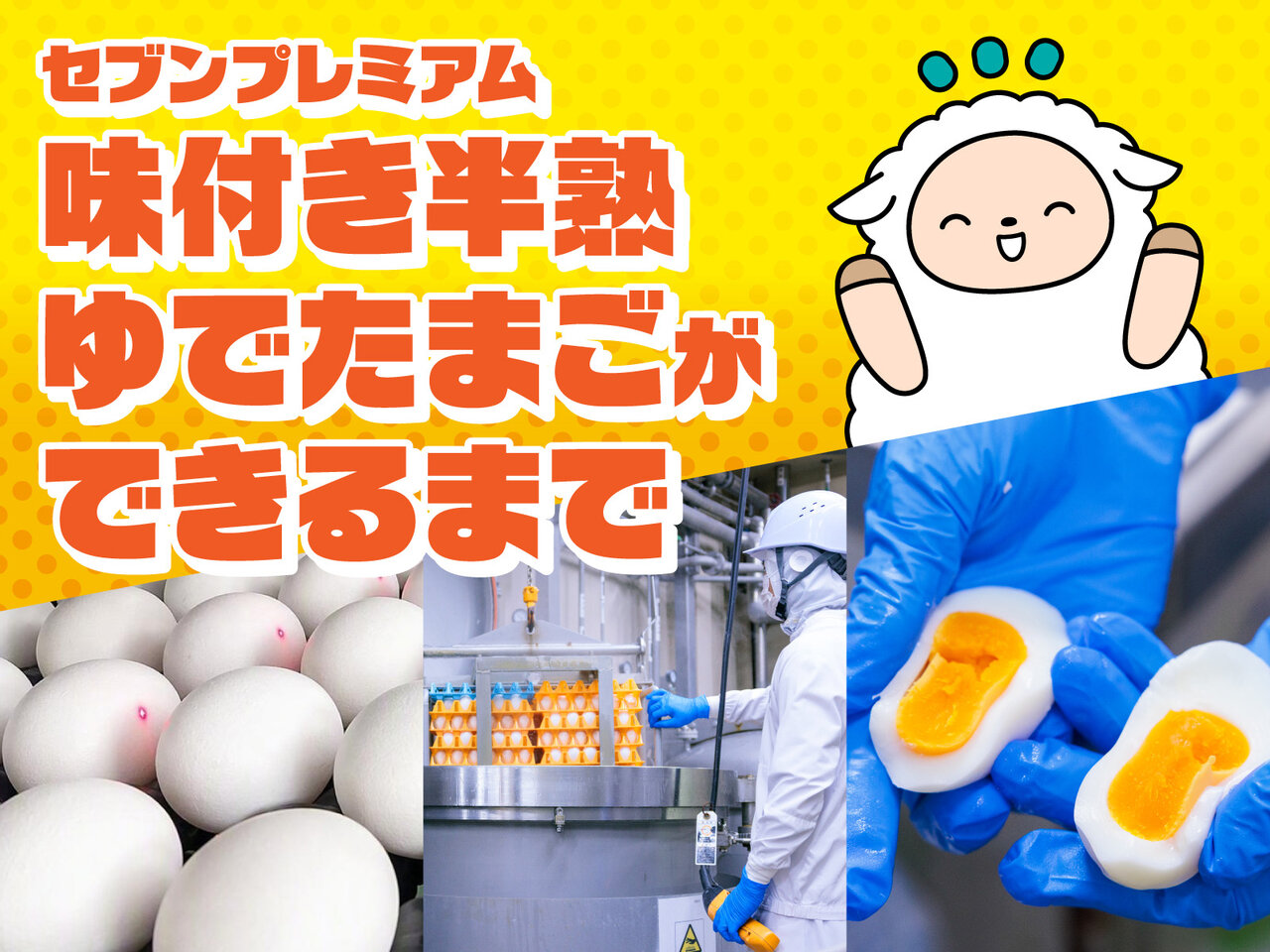
How Does It Get Seasoned Even with the Shell On? Inside the Factory Making "Seven Premium Soft-Boiled Egg"!
"Seven Premium Soft-Boiled Egg," a familiar favorite at 7-Eleven stores. Despite their simplicity, how do they achieve that perfect soft-boiled texture and just the right amount of saltiness?
To uncover the secret, Mezamē visited the factory where they are made! From selecting the eggs to seasoning them, we take you behind the scenes of the manufacturing process—something you rarely get to see—to discover the attention to detail that goes into creating their delicious taste.

Mezamē
Hello! I’m Mezamē, Asupresso’s friendly mascot!
Today, I’m visiting ISE DELICA the company that makes "Seven Premium Soft-Boiled Egg" and other products♪ I’m here to find out how they differ from the soft-boiled eggs we make at home and uncover the secrets behind their delicious taste. Factory Manager, thank you for having me today!

Onami
I’m Onami, the Factory Manager at ISE DELICA’s Shirahane Factory. Welcome to our factory! Of course, we put a great deal of care into making our products delicious, but we also go through numerous quality checks and manufacturing processes to ensure they are safe and reliable. I hope you enjoy taking a closer look behind the scenes!
Chapter 1: Aim for the Perfect Boiled Egg!
The foundation of safety and quality is the quality of the eggs used to make these boiled eggs. The process begins by carefully selecting the eggs delivered to the factory, using specialized machines as well as human eyes.
The First Step: Washing the Eggs

Onami
The eggs are thoroughly sanitized and washed using temperature-controlled water to remove bacteria and dirt from their shells. This is an important step in ensuring that the eggs meet the quality standards required to be safely eaten even when raw.
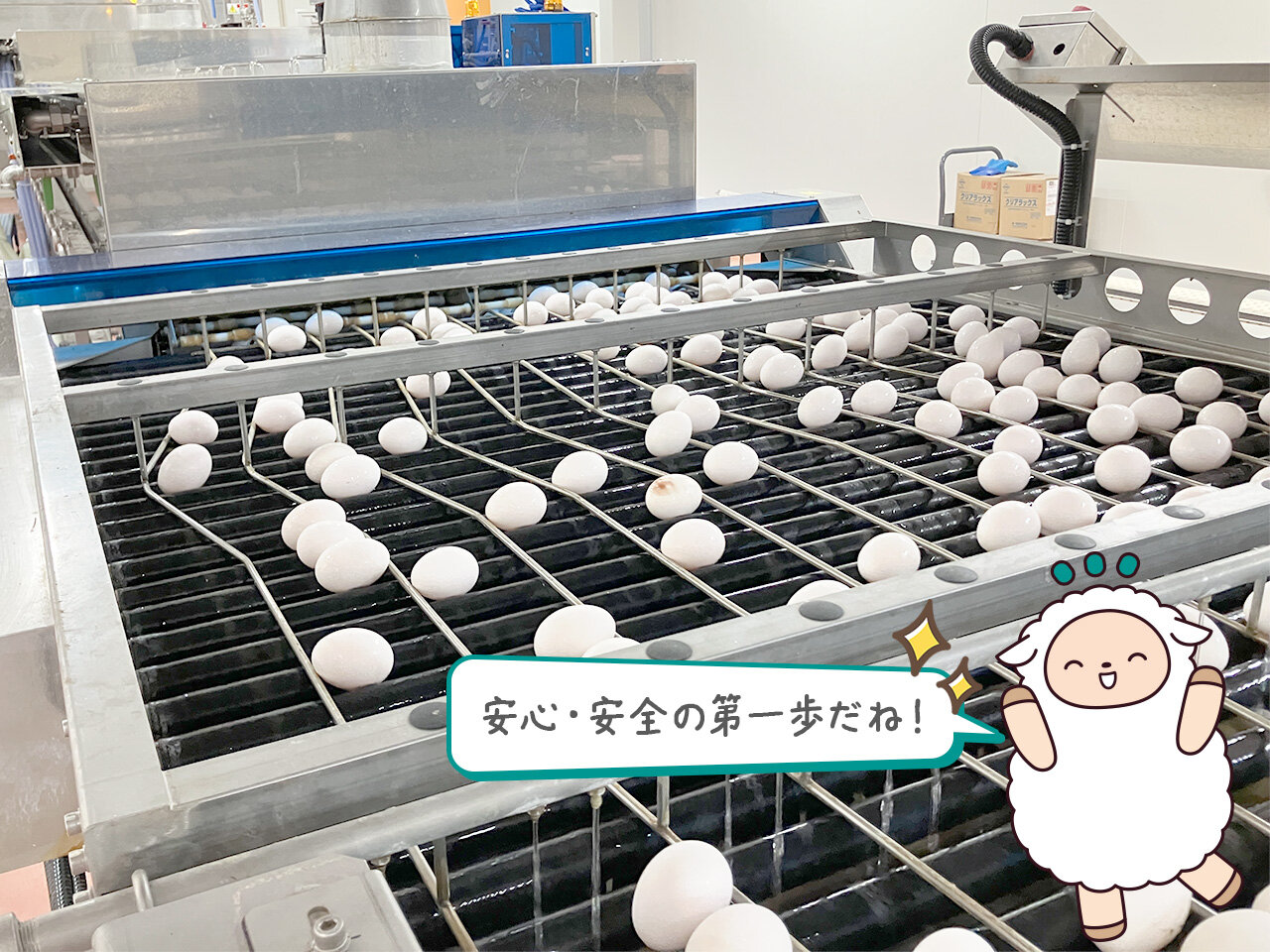
"That's the first step toward making our eggs safe and reliable!"
The Second Step: Inspecting the Eggs for Cracks

Onami
Next, we inspect the eggs carefully to make sure none of the cracks in their shells are missed. A testing device similar to a small hammer gently taps each egg, and we check for cracks based on differences in the sound and resonance.
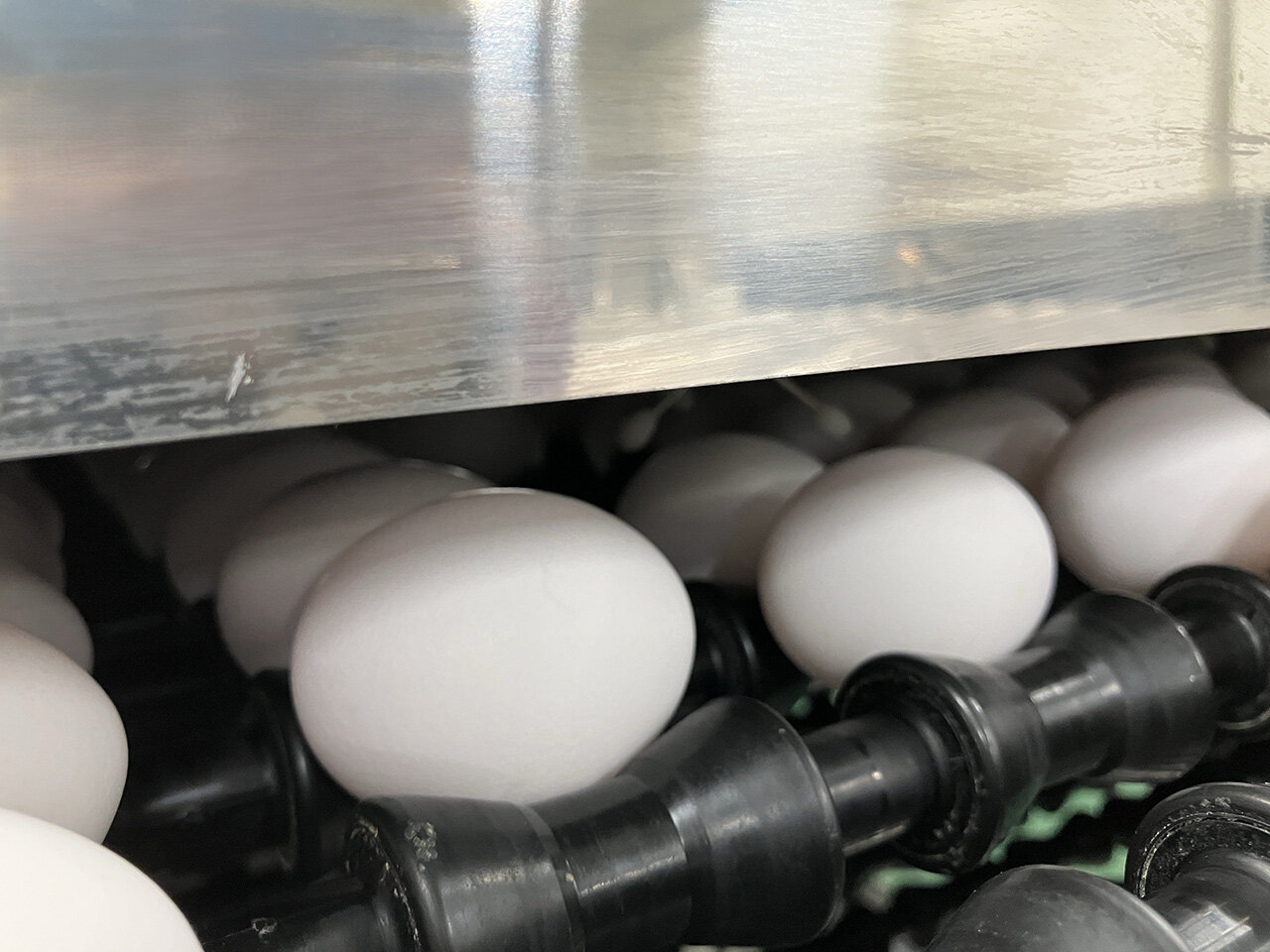
The eggs are gently tapped with a testing device to check for cracks.

Mezamē
So even cracks that are hard to see with the naked eye can be detected! But why is it necessary to check the eggs so thoroughly?

Onami
Cracks in the shell can allow moisture and carbon dioxide to escape more easily, which can cause the egg’s freshness and flavor to deteriorate. They can also make it easier for bacteria to enter, so we carefully inspect each egg during this process.

Mezamē
I see! So this is an essential inspection for making boiled eggs that are both delicious and safe to eat.
The Third Step: Inspecting Each Egg by Hand
After the eggs are inspected using specialized equipment, employees conduct a final visual inspection of each one.
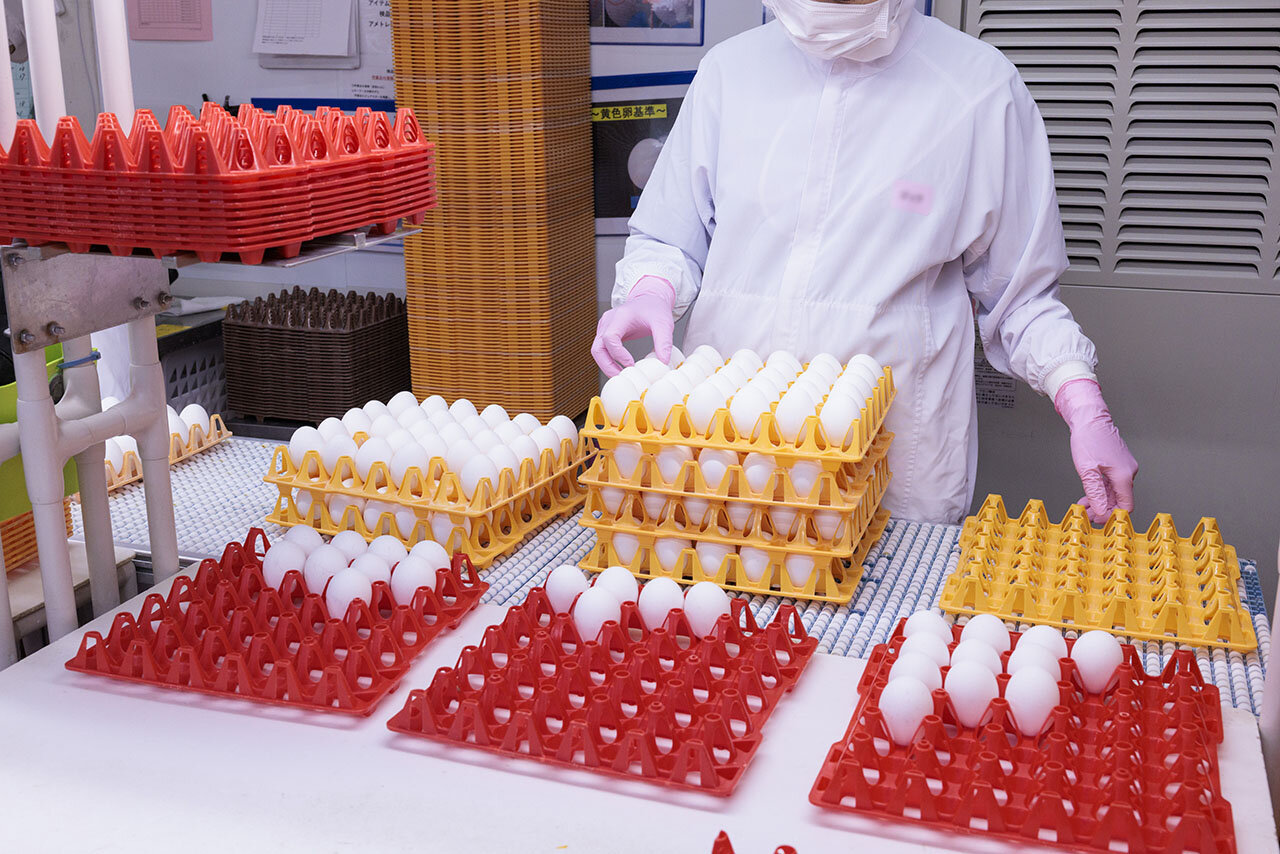
Eggs with dirt, cracks, or other issues identified during the visual inspection are sorted into red trays.

Onami
This is a crucial step: we carefully check each egg to make sure the shells aren’t rough and that none have dirt or cracks. Once the eggs pass all these checks, they’re finally ready to take the first step toward becoming "Soft-Boiled Egg."

Mezamē
It takes quite a lot to make it through all the checks and be selected as a raw ingredient egg! Once the eggs pass inspection, do they move straight on to the boiling process? They’d taste better if we boiled them right away, wouldn’t they?
…Or so Mezamē thought. Instead, the next stop on the tour was the "Pre-Boiling Preparation Room."

Onami
The pH of the egg white* and the temperature at the center of the egg are important for making the shell easy to peel and achieving a good texture. We let the eggs sit here for a while so that these conditions reach the specified levels.
*A value that indicates the degree of acidity, neutrality, or alkalinity.

Mezamē
I had no idea! The staff carefully adjust things like air conditioning and airflow to keep the eggs in tip-top condition. So that’s another secret behind the delicious flavor♪
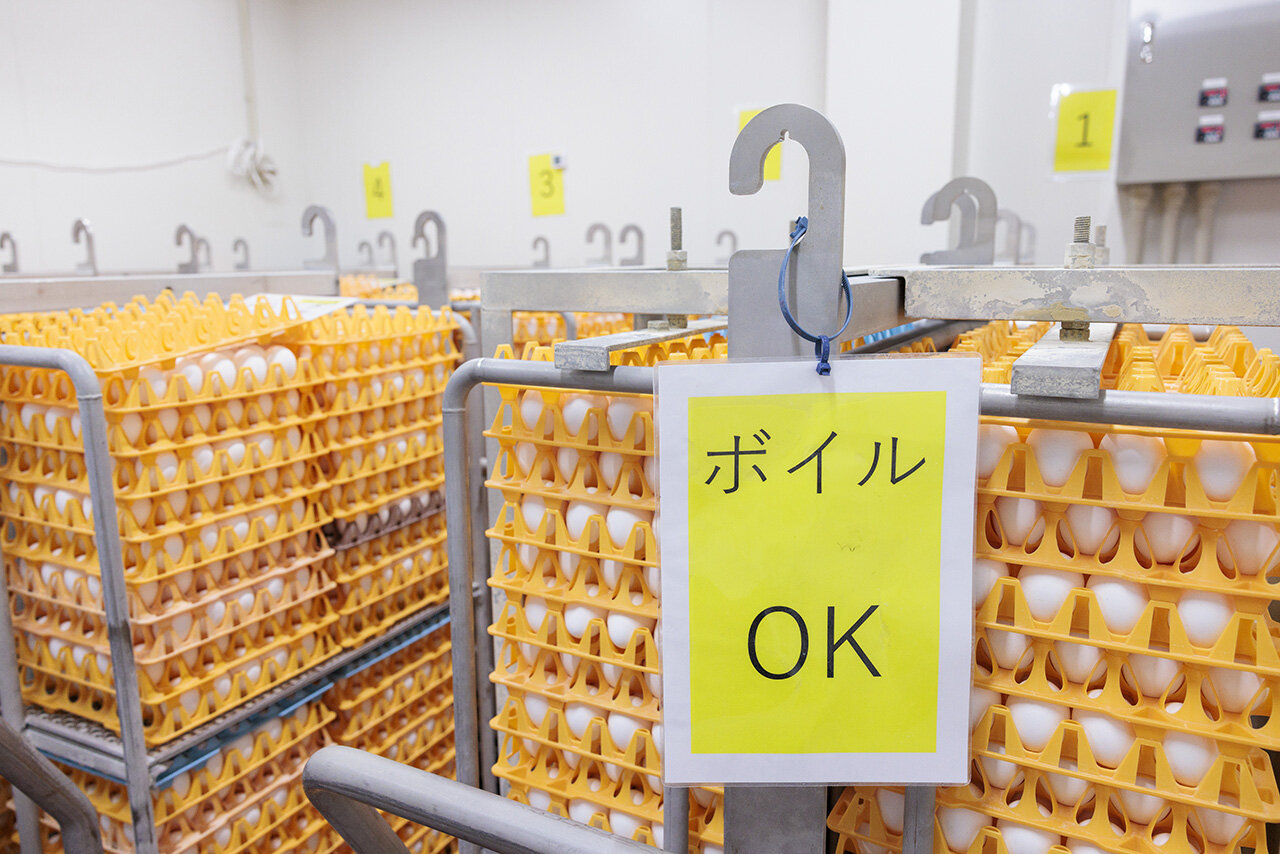
Raw eggs kept in the Pre-Boiling Preparation Room before moving on to the boiling process.
Chapter 2: The Pursuit of Flavor Is No Easy Task
Once everything is ready, it’s time for the boiling process!
Behind the smooth texture of the yolk unique to soft-boiled eggs, the perfect firmness of the egg white, and the just-right saltiness that spreads throughout the entire egg are a two-stage boiling process with precise temperature and time controls, along with special techniques to ensure the seasoning is absorbed evenly.
The "Two-Stage Boiling Process" Behind the Perfect Texture
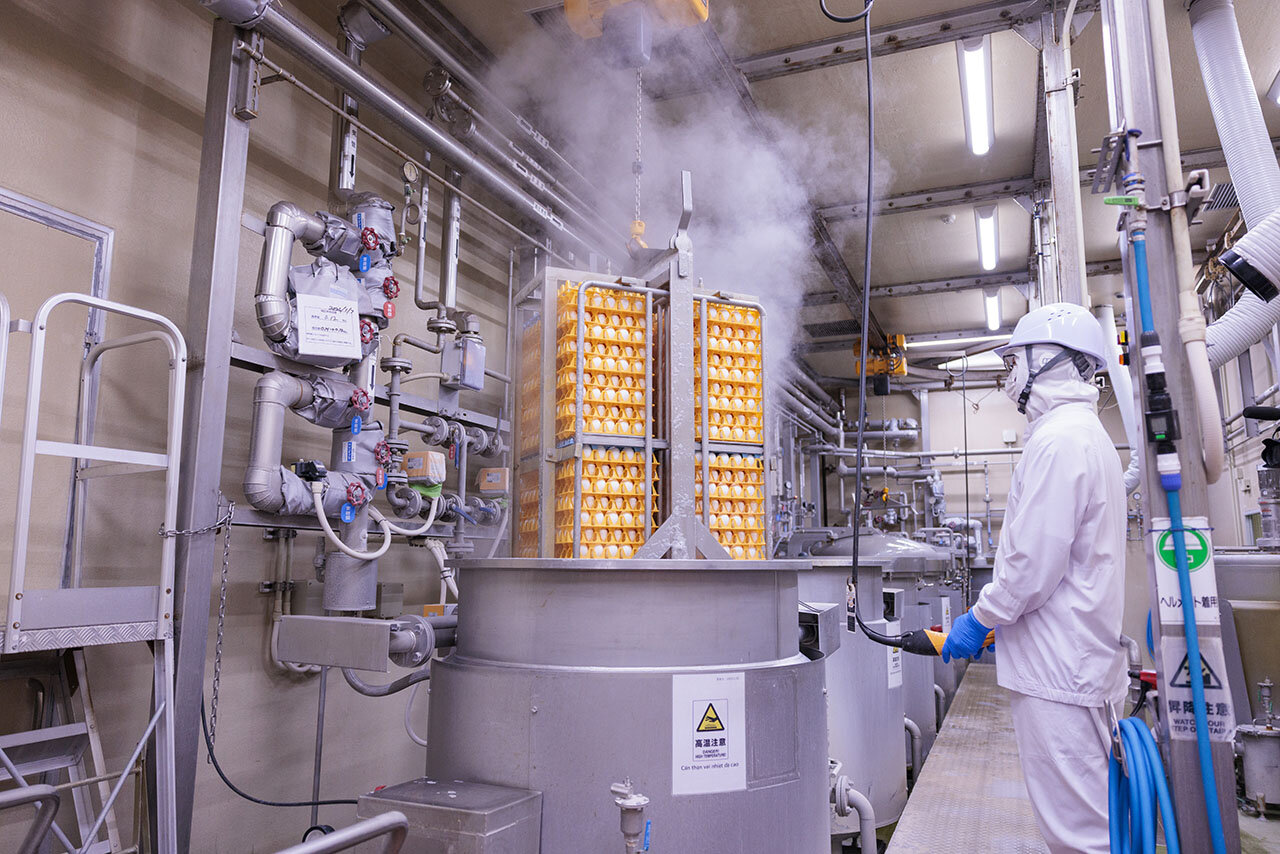
When you enter the boiling room, the first thing that catches your eye is a large boiling vat billowing with steam. A crane lifts around 2,000 eggs at a time and slowly lowers them into the vat. After boiling for several minutes—

Mezamē
Huh? Just when I thought the eggs were being lifted out of the vat, they were lowered into the vat next to it! Are they boiled twice?
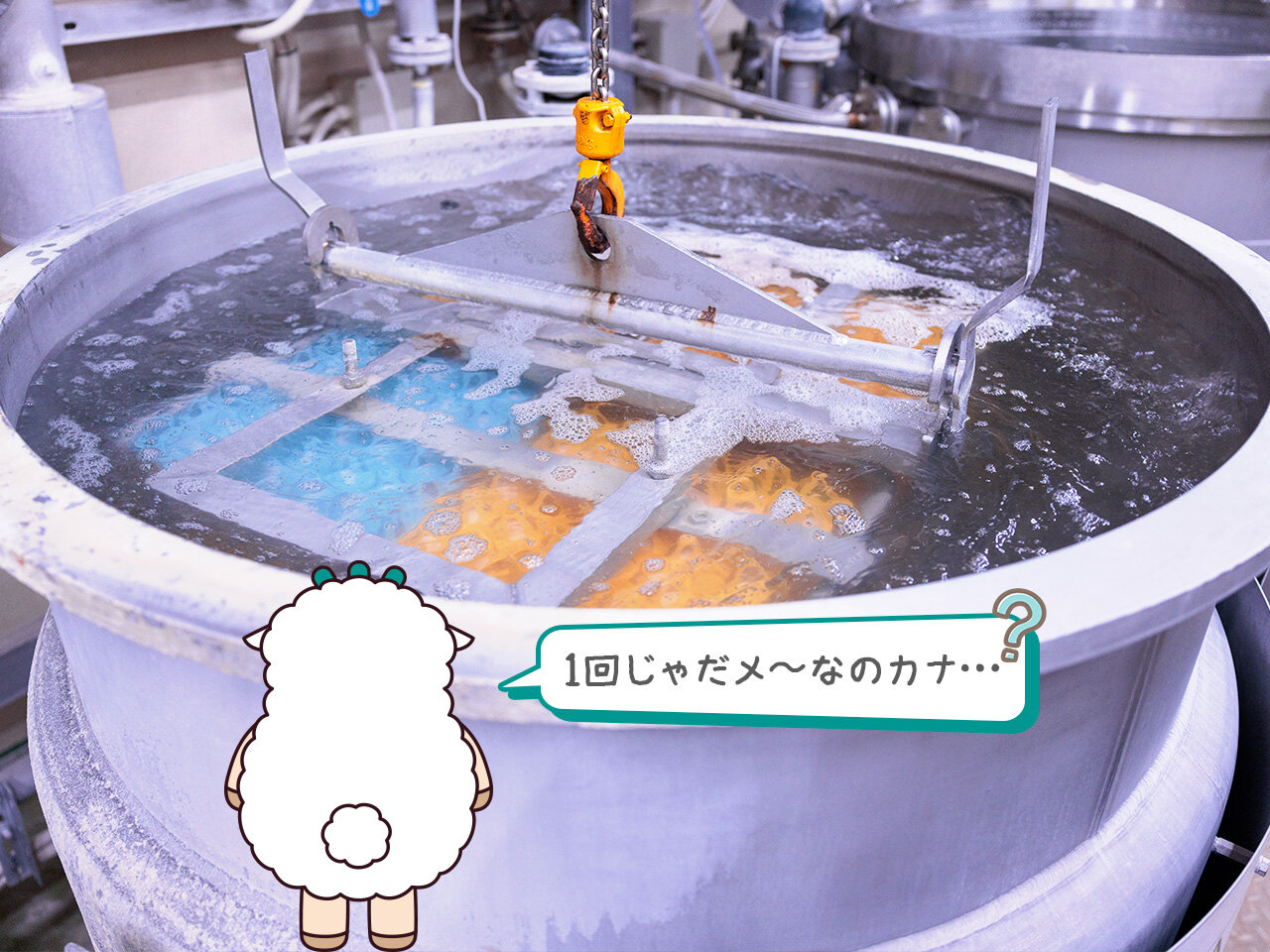
"I guess boiling them just once isn’t enough…?"

Onami
Actually, egg whites and egg yolks solidify at different temperatures, so boiling them just once would mean that one or the other would not reach the ideal texture. That’s why we use a two-stage boiling process: the first stage partially sets the egg white, while the second, main boiling stage brings the yolk to the ideal soft-boiled consistency.

Mezamē
I see! So this extra step is what gives the eggs that perfect soft-boiled texture.
Seasoning Under Pressure for Even Flavor
The eggs, now perfectly soft-boiled, move on to the seasoning process.

Mezamē
By the way, Factory Manager, how does the egg get seasoned so well even though the shell is still on?

Onami
Eggshells have many tiny pores that are invisible to the naked eye. We place all the eggs in salt water in the same orientation and apply pressure, allowing the saltiness to penetrate efficiently through these pores. This ensures that every egg is seasoned evenly, with minimal variation in flavor throughout.

Mezamē
So aligning the eggs in the same orientation and applying pressure are the keys to getting the seasoning just right!
Final Chapter: Delivering Safe, Reliable Eggs to Your Table
After seasoning, the eggs undergo checks of their core temperature and salt concentration. The shells are then actually peeled to check how easily they peel and whether the yolks have reached the desired soft-boiled consistency.
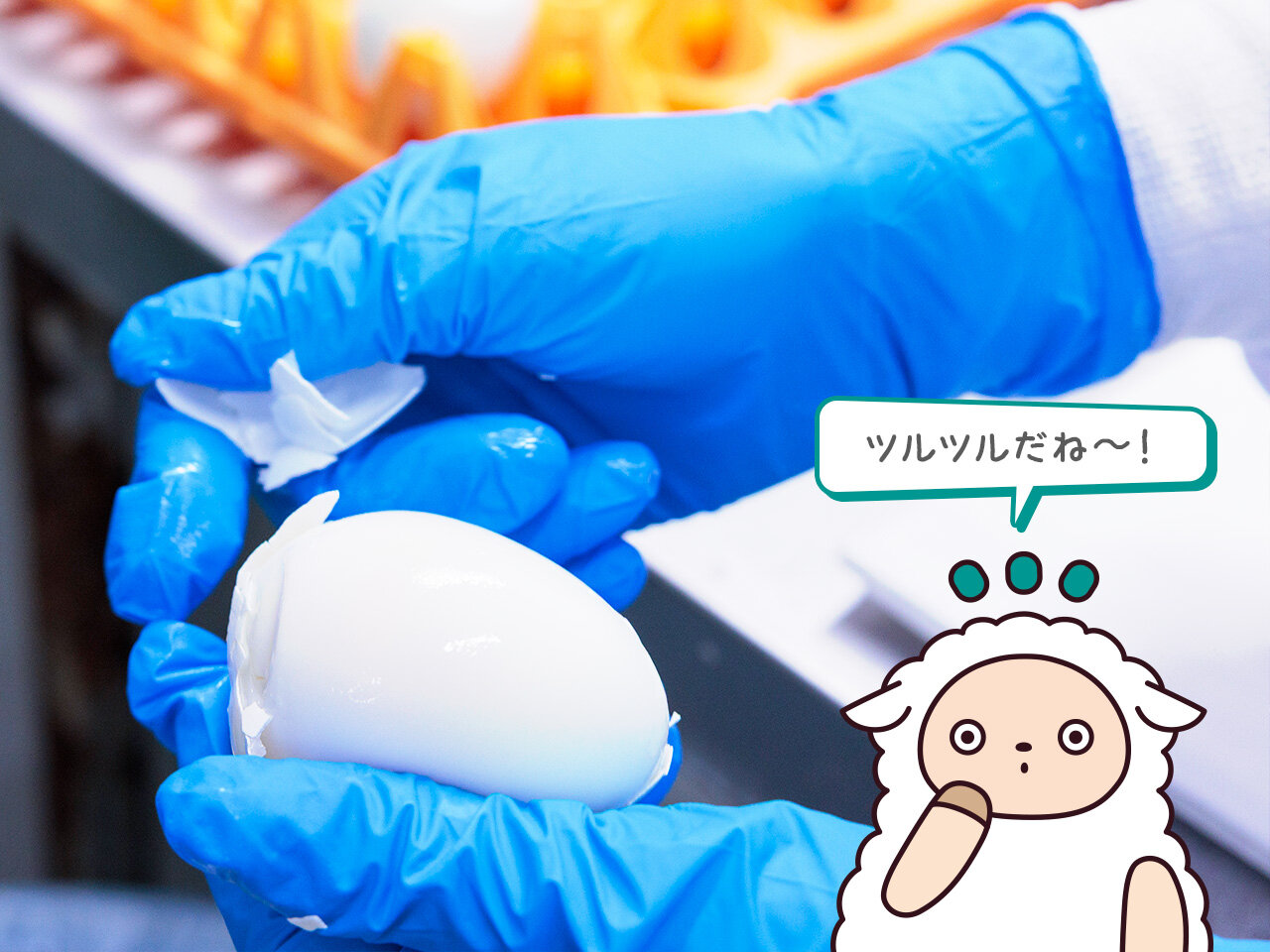
"So smooth and shiny!"
Each production lot is sampled and inspected to make sure the shells peel off smoothly.
Production lots that pass the sampling inspection undergo a visual inspection before moving on to the packaging process.
Appearance is also an important part of quality. Before packaging, each egg is carefully inspected by hand for cracks, dirt, and other imperfections.

Onami
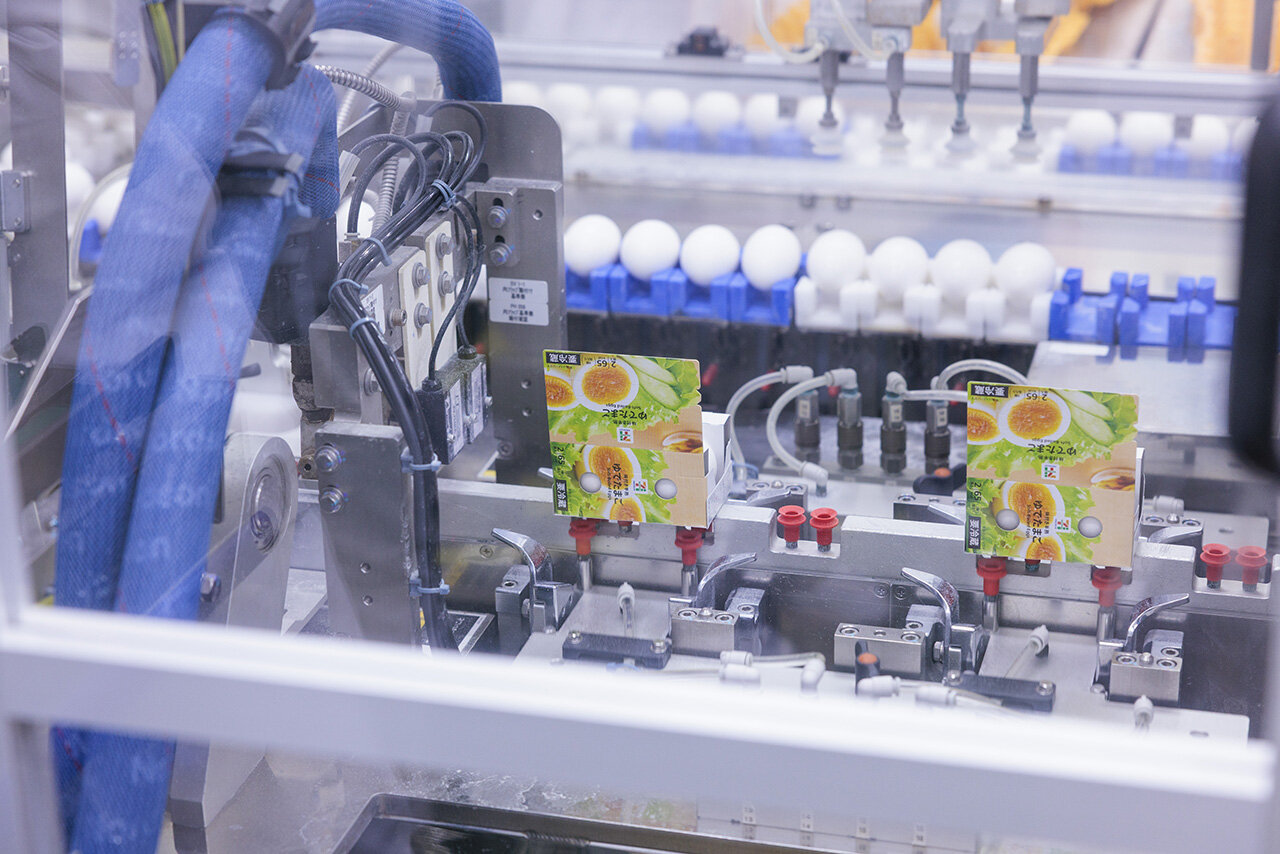
This paper packaging is another example of our attention to detail. It allows excess moisture to escape while helping to prevent condensation from forming. Its role is to preserve the quality achieved at the factory and deliver it to our customers just as it is.
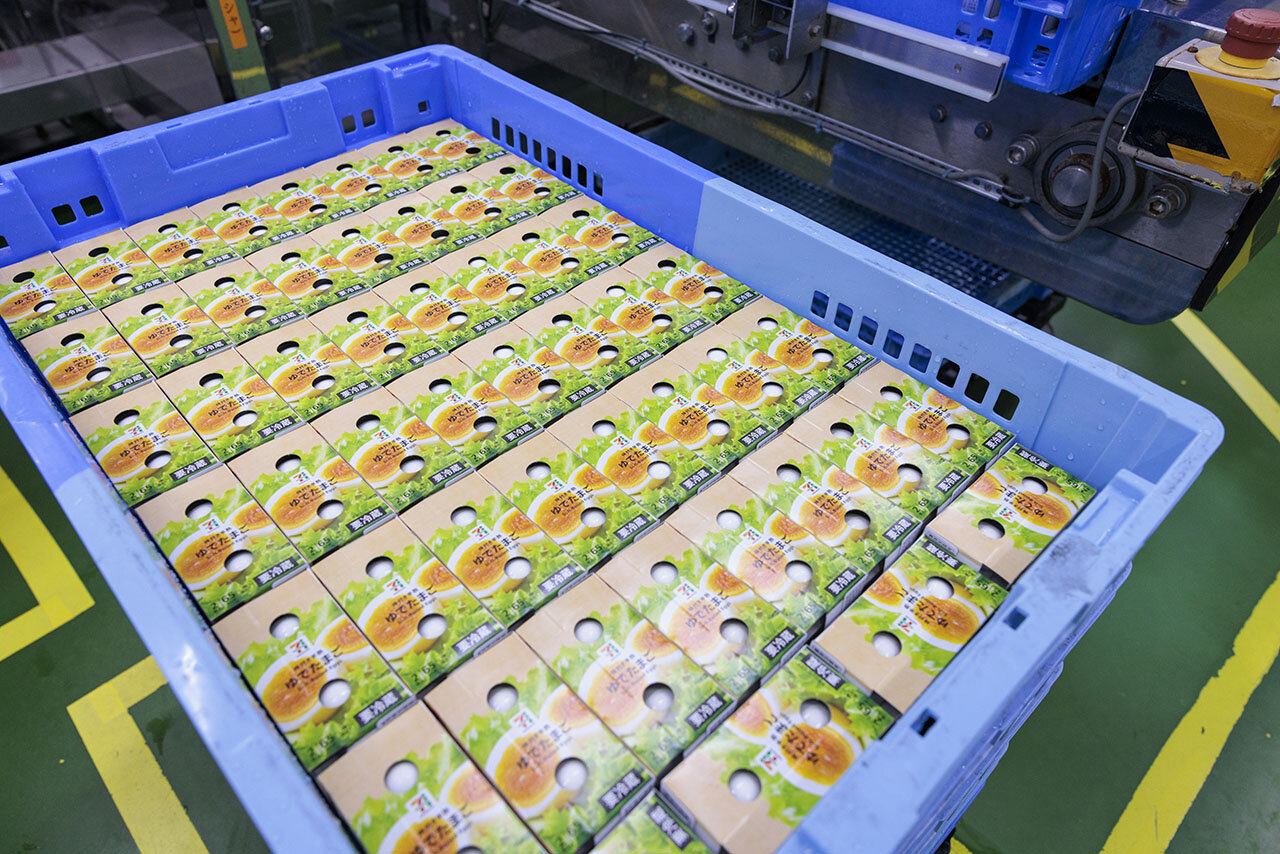

Mezamē
It’s finally time to ship them! I hope they bring smiles and happy "delicious!" reactions to everyone who enjoys them♪
Even the "Seven Premium Soft-Boiled Egg" that we casually pick up at the store are made through a combination of technology dedicated to achieving great taste and the careful handiwork of many people, from inspecting the raw eggs to boiling, seasoning, and packaging.
Behind the consistent deliciousness we enjoy every day are the many thoughtful efforts on the production floor, with each step carried out carefully and precisely.

Onami
Our employees take responsibility for every product they make, so that we can confidently say, "The products made at our factory are safe. Please enjoy them with confidence." We would be delighted if as many people as possible could enjoy them.
This text has been translated using an automatic translation tool.
Related articles